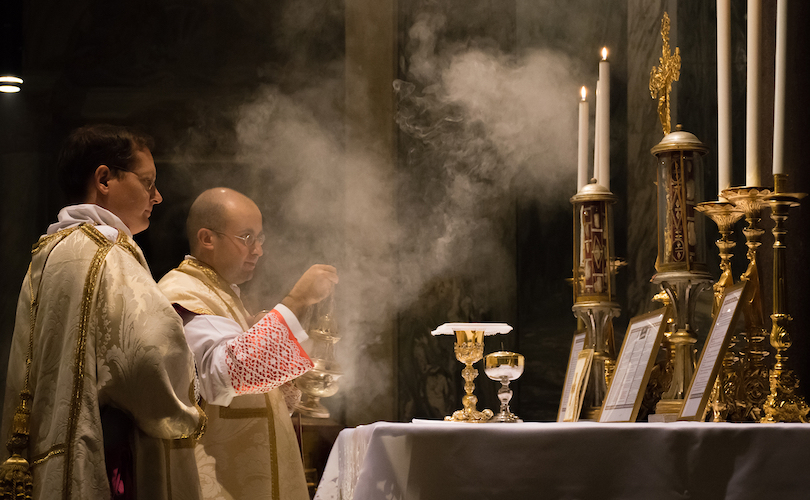
Iran’s Ministry of Intelligence has labeled several outside Christian evangelical broadcasters as “hostile” media organizations, a move that an op-ed for The Christian Post says could expose Iranians accused of cooperating with them—including by watching or listening—to severe punishment.
The July 14 list is part of a broader crackdown described by Janatan Sayeh and Samuel Ben-Ur, research analysts at the Foundation for Defense of Democracies. They argue that Tehran is using the aftermath of its conflict with the United States and Israel to intensify pressure on domestic groups it portrays as enemies, including Christian converts.
Churches and Converts Under Pressure
According to the op-ed, Iranian authorities recently seized Iran’s oldest Protestant church and ordered 20 low-income Christian families living on the property to leave. The authors report that officials told church leaders they were “no longer afraid of America.”
Sayeh and Ben-Ur also cite the demolition of the Mashhad Evangelical Church in June. They describe it as one of two churches in Iran that had previously offered Persian-language services before both were closed decades ago.
The authors argue that the timing matters: they say Tehran’s belief that it has withstood American-Israeli pressure has made the regime more willing to take steps against Christians that even hardliners had previously avoided.
Arrests, Disappearances and Prison Allegations
The op-ed states that Iranian authorities have arbitrarily detained more than 6,000 people since the war began on Feb. 28, with Christians among those caught in the sweep. It also says propaganda outlets frequently portray Christian converts as Western-aligned or Zionist.
Among the cases cited is Mohammad Nikbakht, a Christian convert and civic activist reportedly detained since March and facing threats of execution. The authors say his brothers have already received death sentences on “corruption on Earth” charges tied to alleged anti-regime protest activity.
The op-ed also names Mary Mohammadi, a Christian convert who was moved to an undisclosed location in late April, according to the authors. They report that her family has lost contact with her.
In May, authorities announced the arrest of three alleged “main elements” of what they called a “Christian evangelistic network,” according to the article. The regime claimed the group had converted relatives and friends to “Zionist” Christianity and prayed for “the victory of the Zionist regime.”
Legal Pressure on Defendants and Lawyers
Sayeh and Ben-Ur argue that Christian cases in Iran are often treated as political offenses, pushing converts into the Revolutionary Court system and prisons such as Evin, which human rights advocates have long associated with detainee abuse.
They point to lawyer Bahar Sahraian, who they say was detained in May while following up on cases at the Shiraz Revolutionary Court. According to the op-ed, she was charged with “assembly and collusion to act against national security,” “propaganda activities against the Islamic system,” and “publishing falsehoods.”
The authors also cite convert Mahshar Parandin, who they say is being held at Evin and has been denied surgery for tumors that threaten her eyesight. They also report that Catholic convert Ghazal Marzban, sentenced to nearly 10 years in Evin for “propaganda against the state,” began a hunger strike over her arrest and prison conditions.
Families Also Targeted
The article says pressure has extended to the families of victims. It reports that the family of Mohsen Rashidi, described as a Christian convert killed during January protests, was barred from placing a gravestone at his burial site and forced to pay about $8,000 to recover his body.
The authors also describe Iran’s legal framework as deliberately vague. They cite Article 500, which they say forbids worship that “interferes with the sacred law of Islam” and was used in nearly 90% of cases against Christians in 2025.
Iran officially recognizes Armenian and Assyrian Christians as ethnic religious minorities, according to the op-ed, while forbidding worship in Persian. The authors add that apostasy can carry the death penalty under Iran’s Islamic penal code, though they note it is not often carried out.
Call for U.S. Sanctions
Sayeh and Ben-Ur say that while Washington has reissued sanctions tied to Iranian drone and oil sales after the near-collapse of a memorandum of understanding, human rights sanctions have been missing from the pressure campaign.
They urge the Trump administration to sanction the Islamic Ideology Dissemination Organization and judges Ashkan Ramesh and Iman Afshari under the Global Magnitsky Act for alleged religious-freedom violations. They also call for sanctions consideration against local policing bodies involved in church demolitions and Christian arrests.
The authors further argue that the United States should fill the vacant ambassador-at-large for international religious freedom post and ensure that religious freedom remains part of future talks with Tehran.
Their warning is blunt: if Iran believes it has survived maximum pressure without consequences for domestic persecution, the latest moves against Christians may be only the beginning.