

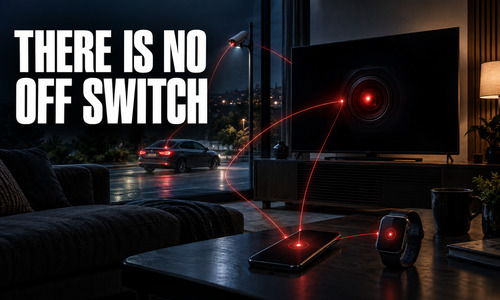
The television is off. The screen is dark. The family has stopped watching.
But what if the television has not stopped watching them?
A major investigation into LG smart televisions has uncovered an extraordinary amount of data collection occurring through a device millions of families still think of as little more than an entertainment system. Researchers working with Gamers Nexus, Level1Techs and independent security specialists found televisions scanning local networks and identifying nearby phones, smartwatches, printers, thermostats, air purifiers and other connected devices.
They also examined LG’s Automatic Content Recognition technology, which can identify what viewers are watching across apps and external inputs, including content delivered through HDMI. Voice commands could be converted into text and stored in logs, while researchers reported that microphone activity sometimes continued for approximately 10 to 15 seconds after a user stopped speaking. In some tests, voice data was stored while the television was disconnected from the internet and transmitted after connectivity returned.
The potential scale is enormous. LG Ad Solutions says its global footprint encompasses approximately 216 million LG smart televisions.
Researchers also uncovered security vulnerabilities that they believe could potentially allow a compromised television to become a covert listening device.
That is troubling enough. But the most disturbing part of the investigation is not what one television may know. It is how perfectly that television fits into a much larger surveillance system already surrounding us.
The Tracking Device In Your Pocket
Your phone knows where you sleep, where you work, which church you attend, which medical offices you visit and whose home you entered last night. Apps can collect location information, browsing activity, device identifiers, purchases and behavioral data–often through software quietly embedded inside otherwise ordinary applications.
A federal judge recently allowed a lawsuit against Allstate to proceed over allegations that its analytics subsidiary tracked drivers through their phones. The lawsuit claims software incorporated into apps such as GasBuddy, Life360 and Fuel Rewards collected information about location, trip distance, speed, braking and phone usage. That information was allegedly used to influence insurance decisions or sold to other insurers. Allstate denies improperly collecting the data and says users consented.
But this illustrates how little control people may have over information produced by devices they carry everywhere. Someone can download an app to find cheaper gasoline without realizing that a separate company may be learning how fast he drives, how hard he brakes and where he travels.
The smartphone did not merely give us access to the world. It gave the world access to us.
var images = [],
index = 0;
images[0] = ““;
images[1] = ““;
images[2] = ““;
images[3] = ““;
index = Math.floor(Math.random() * images.length);
document.write(images[index]);
//done