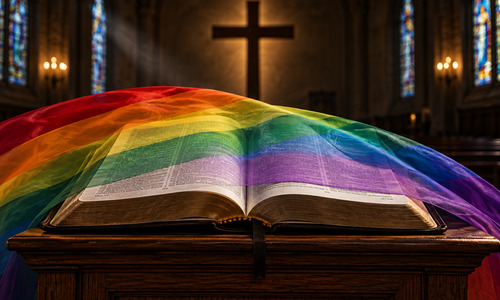


For years, traditional Methodists were warned that holding firmly to biblical teaching would leave them isolated, irrelevant and unable to survive in a changing culture. If the church wanted a future, they were told, it would have to become more inclusive, more flexible and less dogmatic about what Scripture actually says.
Then the United Methodist Church split—and something unexpected happened.
The denomination that embraced progressive theology has continued struggling with declining membership, aging congregations and church closures. Meanwhile, the Global Methodist Church, formed only four years ago around historic Wesleyan doctrine and biblical authority, has grown from approximately 4,700 congregations in 2024 to 7,250 today.
It now includes 55 annual conferences, with much of its recent expansion occurring outside the United States. What began as a refuge for congregations leaving the United Methodist Church is increasingly taking the shape of a global Christian movement.
The Methodist shaking brought enormous pain. Congregations lost buildings. Friendships were broken. Pastors watched churches they had served for decades become divided. Millions of dollars were spent disentangling local congregations from a denominational structure many no longer recognized.
But on the other side of that shaking, two very different futures are emerging.
The Argument Was Never Only About Sexuality
The public battle centered on same-sex marriage and the ordination of practicing LGBTQ clergy. In 2024, the United Methodist General Conference removed its longstanding bans on both.
Yet sexuality was never the deepest issue. Beneath that debate was a more fundamental question: Does the Bible possess the authority to correct the church, or may the church reinterpret the Bible whenever its teachings conflict with the culture?
Once Scripture becomes something to be revised rather than obeyed, nearly every Christian doctrine becomes negotiable. Sin can be redefined. Repentance can be discarded. The uniqueness of Christ can be softened. The Gospel can gradually be transformed from God’s rescue of sinners into a religious endorsement of whatever the surrounding culture already believes.
Traditional Methodists eventually realized they were not simply arguing over one paragraph in a denominational rulebook. They were worshiping alongside people who increasingly spoke a different theological language.
One side viewed the church as an institution that must evolve with society. The other believed the church had been entrusted with a message it had no authority to rewrite.
That conflict could not continue forever.
var images = [],
index = 0;
images[0] = ““;
images[1] = ““;
images[2] = ““;
images[3] = ““;
index = Math.floor(Math.random() * images.length);
document.write(images[index]);
//done
The Cost Of Compromise
The United Methodist Church has been declining in America for generations. When the denomination was formed in 1968, it had approximately 11 million American members. Today, that number has fallen below four million.
Some of the recent collapse resulted from more than 7,600 congregations leaving during the disaffiliation period. But the larger decline began decades before the Global Methodist Church existed.
The denomination’s progressive turn did not reverse that trajectory. It accelerated the theological realignment while offering little evidence that cultural accommodation can fill empty sanctuaries.
This pattern is not unique to Methodism. America’s mainline Protestant denominations have repeatedly surrendered historic Christian teachings in hopes of appearing more relevant. Yet the promised crowds rarely arrived. Churches gained favorable headlines, denominational resolutions and approval from cultural elites—but continued losing the people in the pews.