
Two very different events unfolded in Michigan within a matter of days–and together they revealed something important about America’s changing religious and political landscape.
On August 2, tens of thousands of Shiite Muslims filled the streets of Dearborn for the annual Arbaeen procession, commemorating the death of Hussein ibn Ali, a central figure in Shiite Islam. Widely circulated estimates placed attendance near 45,000, although a definitive official count has not been released.
The religious procession that has grown substantially over several years.
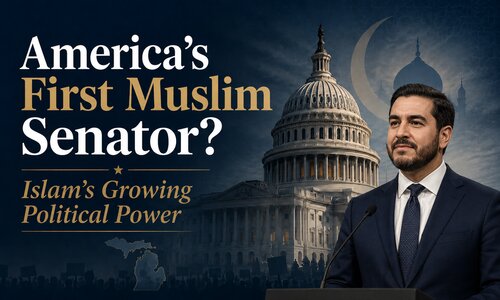
Two days later, Abdul El-Sayed narrowly won Michigan’s Democratic nomination for the United States Senate. He now faces Republican Mike Rogers in November. Should El-Sayed win, he would become the first Muslim elected to the U.S. Senate.
The two events were separate, but the larger picture should not be ignored.
Islam is becoming more confident, organized and politically influential in America. At the same time, much of the American church is becoming increasingly divided, timid and absent from the public square.
Islam Is Organizing While The Church Is Retreating
Muslims still account for only about 1.2 percent of American adults. Christians, by comparison, represent approximately 62 percent. Yet cultural and political influence is not determined by numbers alone. It is determined by conviction, organization, institutional strength and the willingness to act.
That is what makes the sight of tens of thousands of Muslims marching together so significant.
They were willing to close businesses, rearrange schedules, travel considerable distances and bring their children into the streets for a public expression of religious identity. Their faith was not hidden inside a mosque. It was visible, communal and unapologetic.
Contrast that with much of American Christianity.
The United States contains tens of millions of professing Christians, thousands of churches, large Christian universities, national ministries and vast media networks. Yet it is increasingly difficult to imagine 40,000 or 45,000 Christians gathering in one American city around a clear biblical concern–especially without becoming consumed by denominational rivalry, political infighting or arguments over personalities.
The problem is not that Christianity lacks people or resources. The problem is that it increasingly lacks cohesion, confidence and courage.
Many churches have taught believers to treat Christianity as a private therapeutic experience rather than a comprehensive worldview. Christians attend services, listen to sermons and then return to a culture being shaped by people who possess a much clearer understanding of institutional power.
Islamic communities are organizing. Secular progressives are organizing. Socialists are organizing. LGBTQ activists are organizing.
Too often, Christians are merely watching.
var images = [],
index = 0;
images[0] = ““;
images[1] = ““;
images[2] = ““;
images[3] = ““;
index = Math.floor(Math.random() * images.length);
document.write(images[index]);
//done
From Dearborn To The Senate
El-Sayed’s victory did not happen overnight.
After losing Michigan’s 2018 Democratic gubernatorial primary, he built a media platform, cultivated progressive alliances and developed a statewide political organization. During his Senate campaign, he reportedly held more than 500 events and assembled approximately 12,000 volunteers. He then defeated an establishment-backed member of Congress despite more than $60 million in outside spending throughout the contest.
That is how political influence is built: patiently, locally and persistently.
Michigan’s concentrated Arab and Muslim communities have learned that population alone is not enough. They are developing candidates, registering voters, building advocacy organizations and making their priorities impossible for political parties to ignore.
Michigan has demonstrated how a highly engaged religious and ethnic community can become decisive in a closely divided state.
This should concern Christians–not because Muslim citizens lack the right to participate, but because the church has frequently surrendered the very forms of civic engagement that other communities are using effectively.
Influence flows toward those who show up.
Tens Of Thousands In The Streets–But Where Is The Church?
The Dearborn march should force Christians to ask an uncomfortable question: What still possesses enough spiritual importance to bring American believers into the streets?
Christians will attend concerts, sporting events and political rallies. They will mobilize around celebrity pastors and presidential candidates. But where is the sustained Christian movement defending unborn life, biblical marriage, parental authority, persecuted believers, religious liberty or the nation’s support for Israel?
There have been important exceptions, including large prayer gatherings and pro-life events. But these increasingly appear as isolated moments rather than evidence of a unified, disciplined Christian public witness.