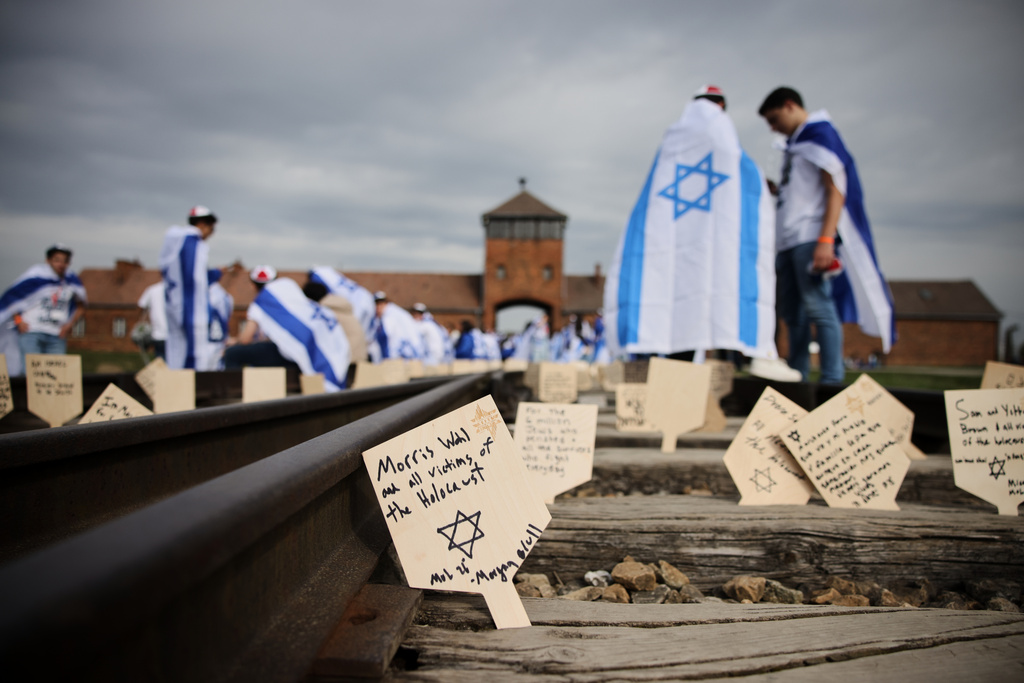
Regent University students traveled to Poland to study the Holocaust and Jewish life before the war, visiting death camps and sites in Warsaw, Lublin, and elsewhere, according to participants and their program leader, Dr. A.J. Nolte of Regent’s Institute for Israel Studies.
A trip to remember Jewish life—and its destruction
Nolte said the program aimed to show students both the loss and “what was lost.” “It’s important to understand that piece of it as well, because that piece of it in particular, Christians don’t usually get,” he explained. “And so that was something that we pushed for, to really have a trip to Poland that was going to cover not only the loss but also give you a sense of what was lost. What was the 700-year community, the largest Jewish community in Europe? What were they like? How did they live?”

He added that he wanted students to grasp the Holocaust’s impact on Poland, Judaism, and the Jewish people. “I think it was really meaningful for students to see this, as this was a living, vibrant community, and it was destroyed,” Nolte said. He also pressed students to consider, “as Christians, how do we think about antisemitism? How does this happen? And what’s our moral responsibility for responding to that?”
According to Nolte, the experience “provided a sense of urgency and context,” and a common student response was, “We can’t let any kind of antisemitism slide.”
Students confront the machinery of genocide
Jason Bauer focused on what he called the “systematic aspect” of extermination at Birkenau. “Like you have in Birkenau, the train that took them exactly where the most convenient spot would be, whether it can be dictated towards the (death) chambers or towards working; and just – it’s almost like a factory, like you view human beings as just cattle so you can just point: you’re gonna live, you’re gonna die, you’re gonna live, you’re gonna die… you see the pure evil that the human race can be, and you want to defend against that more. Because I don’t want to see, you know, things like that happen in my society,” he said.

For Zoe Abbott, prior study could not match the site visits. “Nothing compares to actually seeing it and seeing the atrocities that happened, seeing firsthand the shoes that were there, the hair,” she said. “I think that’s something that I’ll never be able to comprehend or see from just a book or a movie. It’s something you have to experience in person.”
Rose Van Sanders pointed to artifacts that shocked her. “The level of how systematic the Nazis were with using the hair of the women they already killed,” she said. “That completely shocked me because that is something I never heard before. And then we saw like a blanket that had been made from human hair, and just, it’s very horrific.”
From classroom to conscience
Sophia Webster said the scale of loss came into focus on site. “Being there and you’re seeing the sites, and you’re seeing all the faces, you realize what tremendous loss was experienced during that time. All these people with dreams and ideas are just gone like that,” she said.
Webster added that learning about wartime propaganda informed how she views the present. “I know what propaganda was used to turn people against the Jews during World War II. You still see some of it today,” she said. The trip, she explained, encouraged her “to be more vigilant, and also to have this righteous anger to fight against any sort of hatred in the future, whether it’s for the Jewish people or any people group because we’re all important to God.”
Nolte links Poland’s past to Oct. 7
Nolte contrasted the erased Jewish communities of Poland with the present. “You look at Poland, and this community is gone. But you look at Israel. This is a living Jewish state,” he said.
Referencing Oct. 7, 2023, he drew a line between historic sites and places attacked that day. “The difference between Auschwitz and Majdanek and the 10/7 sites is that after you visit Be’eri or Nir Oz or Kfar Aza or the Nova site, they didn’t win this time. In fact, Israel is not only alive, it’s resilient; it’s thriving. It’s pushed back. And the answer to, if we really mean ‘never again,’ Israel is the answer to never again,” Nolte said.